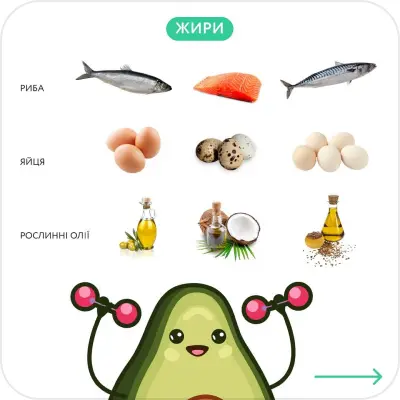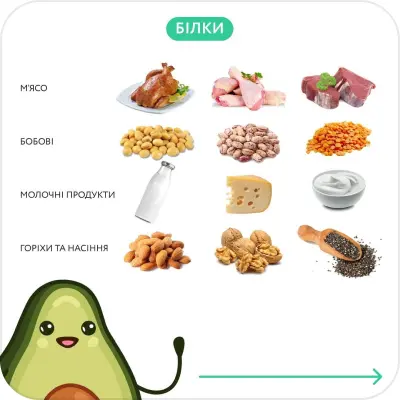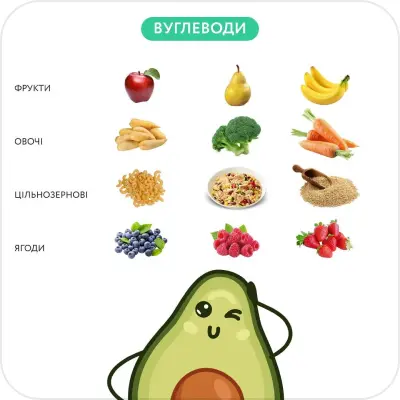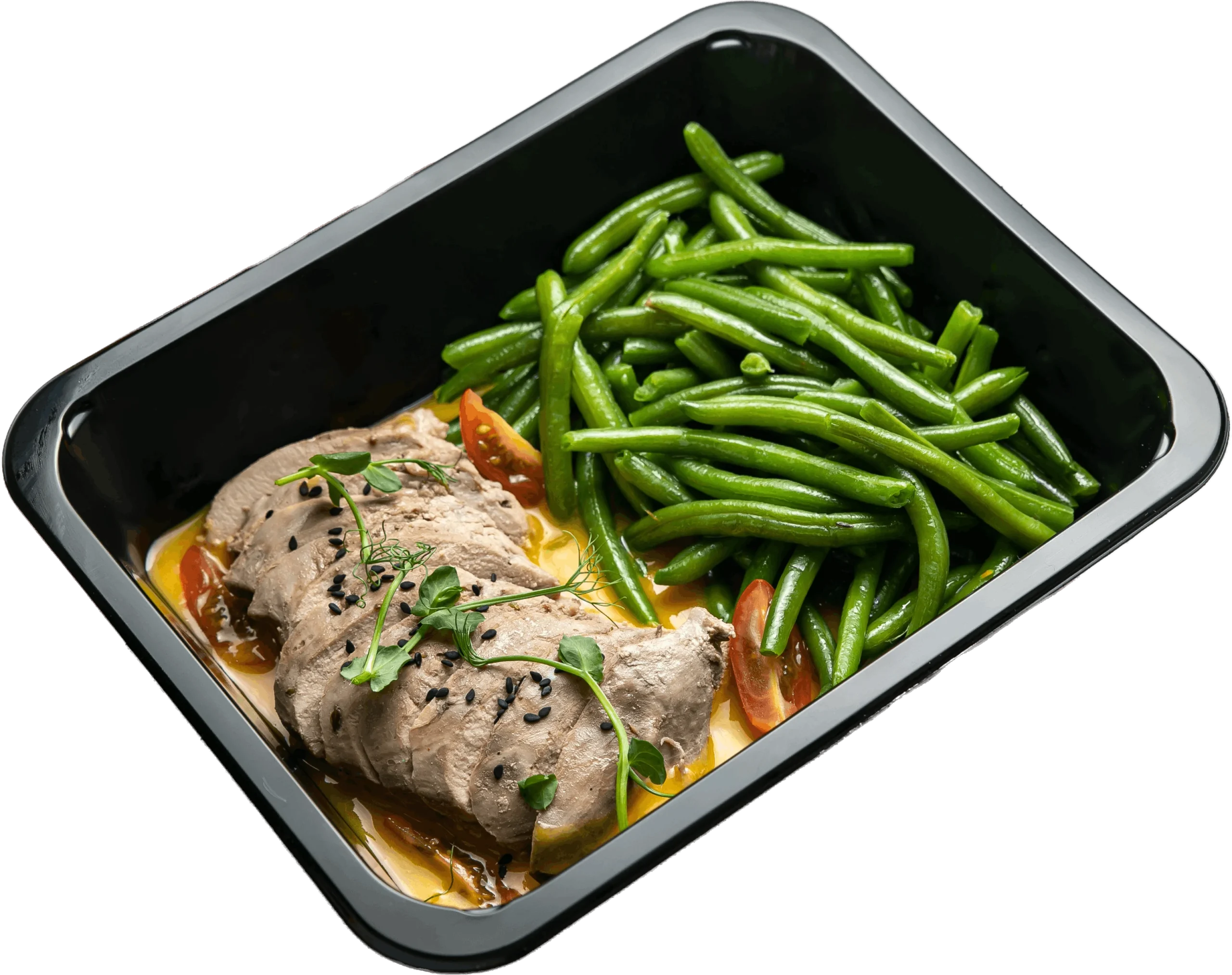

We are often asked the question: “Why does the FoodEx diet combine carbohydrates (wild rice, bulgur, buckwheat) and protein (meat, fish)?”
The debate about how to combine foods to maximize the benefits and not harm the body has been going on for years. We asked Natalia Fedorenko, a nutritionist, what is a separate diet and does it make sense?
WHAT IS THE ESSENCE OF A SEPARATE FOOD SYSTEM?
Separate nutrition is a concept based on the ability to combine foods. The basic principle is the separation of foods due to the fact that different food groups are processed by the human body using different enzymes. For example, protein foods require an acidic environment to digest, while foods containing a carbohydrate component require an alkaline environment.
It is believed that when both proteins and carbohydrates are consumed at the same time, digestion cannot be complete and leads to an inevitable deterioration in the quality of food breakdown. This provokes the processes of decay and fermentation, and the decay products poison our body. This ultimately leads to diseases.
To avoid this, it is recommended to eat only foods from one group at one meal. And only after a certain time – foods from another group.
EXPOSING THE SYSTEM OF SEPARATE NUTRITION
Turning to the knowledge of physiology, it becomes obvious that there is no such thing as a separate diet! At least because everything in nature is balanced. There are practically no products consisting of a single food component.
In the digestive system itself, the process of food processing is not as unambiguous as it is presented by the adherents of the separate nutrition system. For example, an acidic environment does not help digest protein, but only prepares it for further breakdown. The digestion itself takes place not in the stomach, but in the duodenum, where the environment is alkaline.
The enzyme composition of pancreatic juice is perfectly balanced for the digestion of all the necessary food components. The pancreas secretes the necessary food enzymes to break down both protein and carbohydrate foods simultaneously.
The idea of time intervals, again, leads to a dead end. Food stays in the stomach for 3 to 7 hours, and still, before the protein (for example, a meat dish) is eaten, three hours later, carbohydrates will enter the stomach in the form of porridge. So what does it mean – you can eat 2 times a day?
It has been established that serotonin (the hormone of joy) is produced when proteins and carbohydrates enter the digestive system at the same time. The corresponding signals are transmitted to the brain by means of chemicals formed as a result of their joint processing.
Let’s not lose sight of the fact that the founder of the theory of separate nutrition was Herbert Shelton, who had nothing to do with medicine. Modern medicine has not recognized Shelton’s theory of separate nutrition as scientifically sound.
A REASONABLE COMPROMISE
Nevertheless, this food system has helped many people cope with gastrointestinal problems and even lose weight. It should be noted that these were mostly people who had absolutely no food culture before. Separate meals are not a panacea. It’s a trendy concept that helps you lose weight by eating the same foods and reducing the portion you eat.
A nutritionist’s recommendation to FoodEx customers:
“If your body is already accustomed to eating separately, divide your lunch into 2 meals. First, eat some vegetables + carbohydrates / rice, buckwheat, other cereals. And after 1 hour, the second part – vegetables + meat. “