
Many treat fats with caution. And those who “sit” on a diet, generally try to exclude them from the diet. Fatty acids are divided into two categories: saturated (bad) and unsaturated (good).
Function of fats:
Brain cells are more than 60% fat. Its deficiency affects the work of the brain is not the best way. Fats are the main component of many hormones, which is why, if you follow a “fat-free” diet, there is a violation of the menstrual cycle and metabolism. They also form a cell membrane, participate in the absorption of vitamins and trace elements.
Brain cells are more than 60% fat. Its deficiency affects the work of the brain is not the best way. Fats are the main component of many hormones, which is why, if you follow a “fat-free” diet, there is a violation of the menstrual cycle and metabolism. They also form a cell membrane, participate in the absorption of vitamins and trace elements.
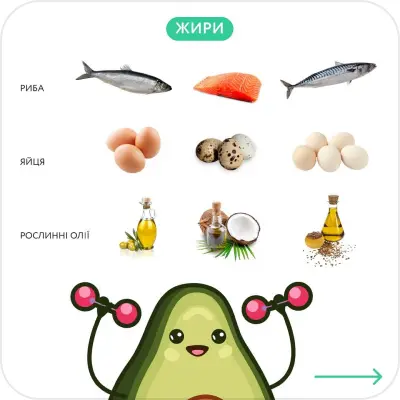
Where to look for healthy fats?
Omega-9 are found in olive, sesame oil, avocado, olives, sesame seeds and nuts (Australian nut, cashews, almonds, pistachios, hazelnuts). A handful of nuts a day is enough to satisfy the need for Omega-9 class fats.
Omega-6 are contained in corn, sunflower, soybean oil, in walnuts, pumpkin, sunflower seeds and tofu.
Life Hacks
Choosing vegetable oil, prefer a product made by cold pressing, with a short shelf life. Remember that the daily human need for fats is not more than 60-80 g. the share of fats of animal origin, ideally, accounts for no more than 20-30%.